
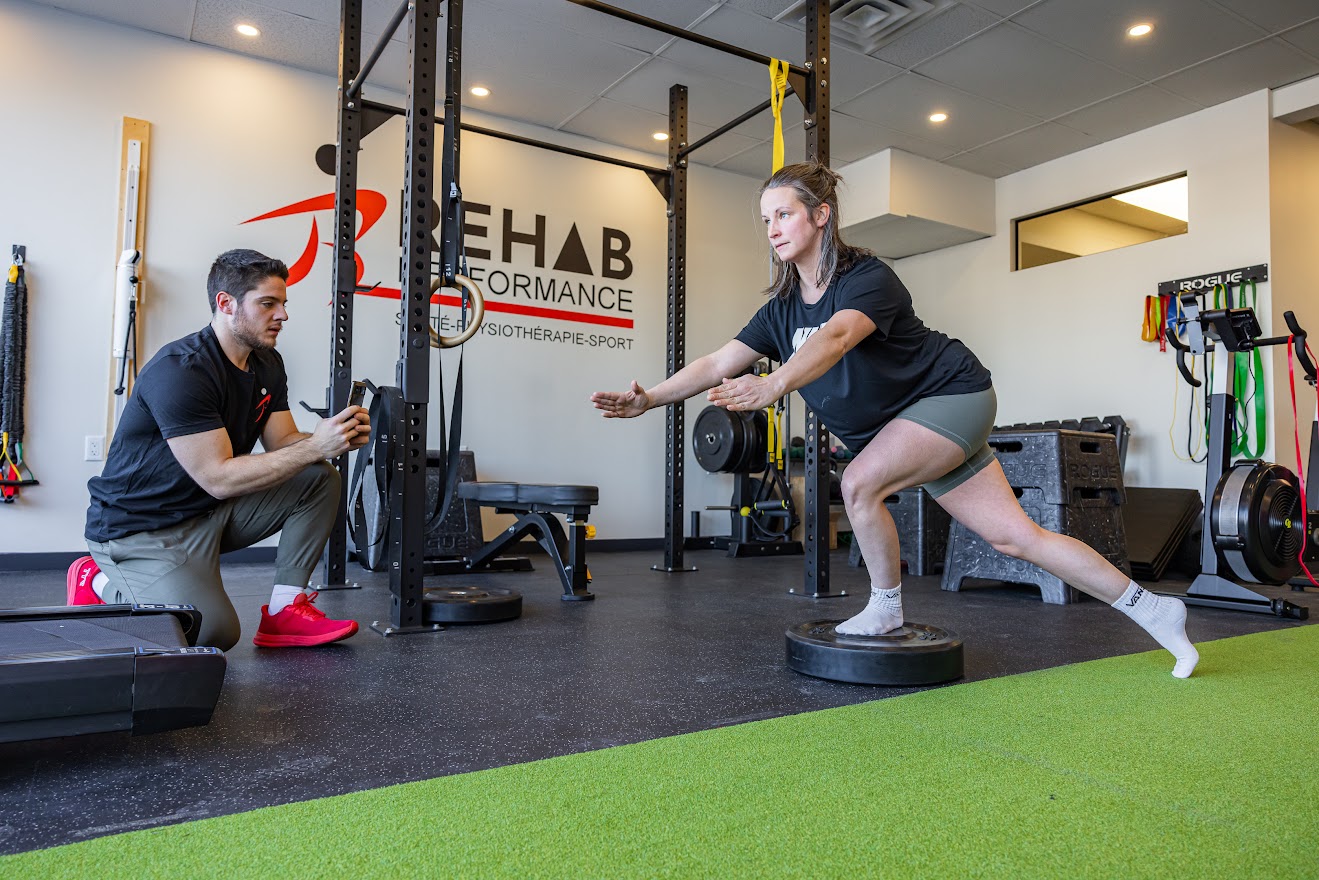
Pain on stairs
Pain when going up or down stairs can come from the knee, hip, foot or ankle. Whether it hurts more going up or down, how fast you move, and how fatigue changes the pain all provide useful clues.
Where can pain show up on stairs?
The same movement can load several regions. Location, symptom quality and when pain appears help guide the assessment.
Knee pain on stairs
Explore knee pain, patellofemoral pain, patellar tendinopathy and meniscus tears.
Hip pain on stairs
Groin or side-of-hip pain may be reproduced when pushing through one leg. See hip pain, hip osteoarthritis and hip labral tears.
Ankle or Achilles pain
Stairs require ankle mobility and strength. Explore foot and ankle pain and Achilles tendinopathy.
Why can going down hurt more than going up?
Descending often requires more control to slow the body, especially at the knee. Going up requires more propulsion. Comparing the two helps identify which type of load reproduces your symptoms.
When should you consult?
An assessment is useful if pain persists, increases, limits daily activities, or is accompanied by swelling, instability or a major loss of function.
Want to understand what is triggering your pain?
A physiotherapy assessment can connect your symptoms to the movement, the region involved and the capacities that need to be rebuilt so stairs feel more comfortable and confident.
Clinic in Blainville • Welcoming patients from across the North Shore