Pediatric Physiotherapy
Pediatric Physiotherapy in Blainville
From the 1st Day of Life
Early Childhood
Young Athlete
Up to 18 Years
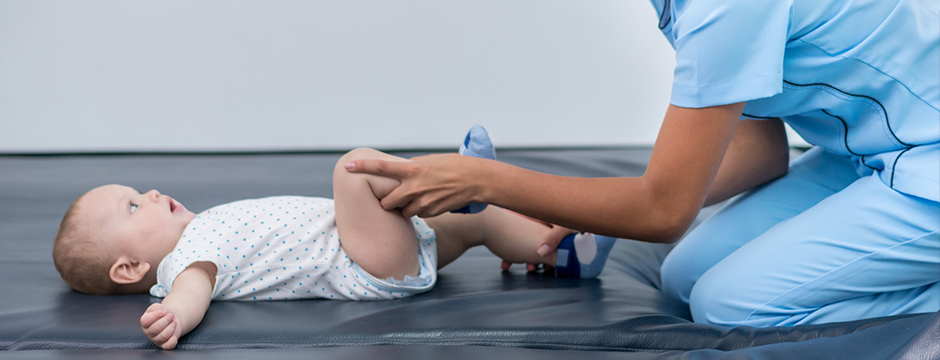
If needed and with your consent, manual treatments can be performed on your child to promote their recovery or development.
Why a Pediatric Physiotherapist Rather Than a Conventional One?
- Children Are Not Mini Adults
- Therapists Trained to Identify Important Elements
- Knowing How to Interact With the Child, Regardless of Age or Language
- Advising You, Providing You With Tools, and Referring to the Right Professional When Needed
Torticolis
Plagiocephaly (Flat Head)
Poor Leg Alignment
Gait Disorder
Coordination Disorder
Motor Delay
Headaches
Respiratory Disorders
Gastroesophageal Reflux
Primitive Reflex Dysfunction
Breastfeeding
Irritability / Hypersensitivity
Young Athlete: A Preventive Evaluation is a Must!
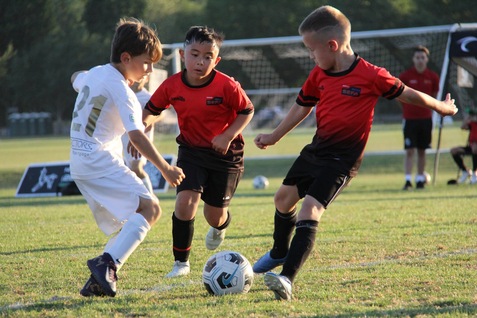
When a child practices a high-intensity, high-impact sport 3 or more times per week (dance, gymnastics, figure skating, hockey, soccer, basketball, volleyball, cheerleading, football, etc.), their body undergoes repeated stress in areas specific to their sport. This stress can have an impact on growing structures and a developing brain. A preventive evaluation allows us to identify deficits in strength, mobility, flexibility, coordination, or balance in order to prevent injuries, optimize performance, and improve recovery. Early and proper support will allow your child to stay active for a long time.
Why Consult at Rehab Performance With Your Child?
Sessions in a Closed Room
To promote confidentiality and safe exploration for your child.
The Whole Family is Welcome
Co-parent, siblings, or support persons can be present to accompany your child.
Adapted Space
Our room can accommodate a stroller, car seat, wheelchair, walker, crutches, or any other equipment.
TMPI Certification
Our pediatric physiotherapist holds a certification in integrative pediatric manual therapy.
Thanks to TMPI expertise, we can also support your child for:
Comment savoir si mon enfant a besoin de consulter ?
Certains signes peuvent indiquer qu’une évaluation en physiothérapie pédiatrique serait bénéfique.
Signes observés par le parent
- Retard de l'acquisition des habiletés motrices (ex. : ne tient pas sa tête droite à 3 mois, ne se retourne pas à 5 mois, ne tient pas assis à 6 mois, ne marche pas à 14 mois)
- L'arrière ou le côté de la tête s'aplatit
- La tête est toujours tournée du même côté
- Marche les pieds vers l'intérieur ou sur la pointe des pieds
- Tombe souvent / est très maladroit
- Très irritable dans plusieurs contextes
- Allaitement douloureux ou difficile, bruit pendant les boires, préférence pour un sein, gaz importants
- Difficulté ou bruit respiratoire, respiration par la bouche
Ce que l'enfant peut mentionner
- Des douleurs de croissance
- Des douleurs récurrentes ou nouvelles
- Mal à la tête
Évaluation préventive recommandée si :
- Bébé prématuré ou avec diagnostic médical
- Bébé ayant subi une chirurgie ou une hospitalisation
- Bébé ayant eu une bronchiolite
- Bébé avec syndrome génétique, trisomie ou trouble neurologique
- Entrée à la garderie ou à l'école
- Enfant pratiquant un sport 3x et plus par semaine
- Enfant très souple
How Do I Know if My Child Needs to Consult?
Signs Observed by the Parent
- Delay in the acquisition of motor skills (e.g., not holding their head straight at 3 months, not rolling over at 5 months, not sitting up at 6 months, not walking at 14 months)
- The back or side of the head is flattening
- The head is always turned to the same side
- Walks with feet turned inward or on tiptoes
- Falls often / is very clumsy
- Very irritable in multiple contexts
- Painful or difficult breastfeeding, noise during feeding, preference for one breast, significant gas
- Difficulty or noisy breathing, mouth breathing
What the Child May Mention
- Growing pains
- Recurring or new pain
- Headaches
Preventive Evaluation Recommended if:
- Premature baby or baby with a medical diagnosis
- Baby who has undergone surgery or hospitalization
- Baby who has had bronchiolitis
- Baby with a genetic syndrome, trisomy, or neurological disorder
- Starting daycare or school
- Child practicing a sport 3 or more times per week
- Very flexible child
FAQ — Pediatric Physiotherapy
The evaluation lasts 60 minutes, then the following sessions last between 45 and 60 minutes depending on the treatment plan.
Premature baby, baby with a medical diagnosis, baby who has undergone surgery or hospitalization, baby who has had bronchiolitis, baby with a genetic syndrome, trisomy, or neurological disorder, starting daycare or school, child practicing a specific sport 3 or more times per week, or a very flexible child.